Engineering basics
Where general structural and cosmetic parts start. Mature process, lowest unit cost.
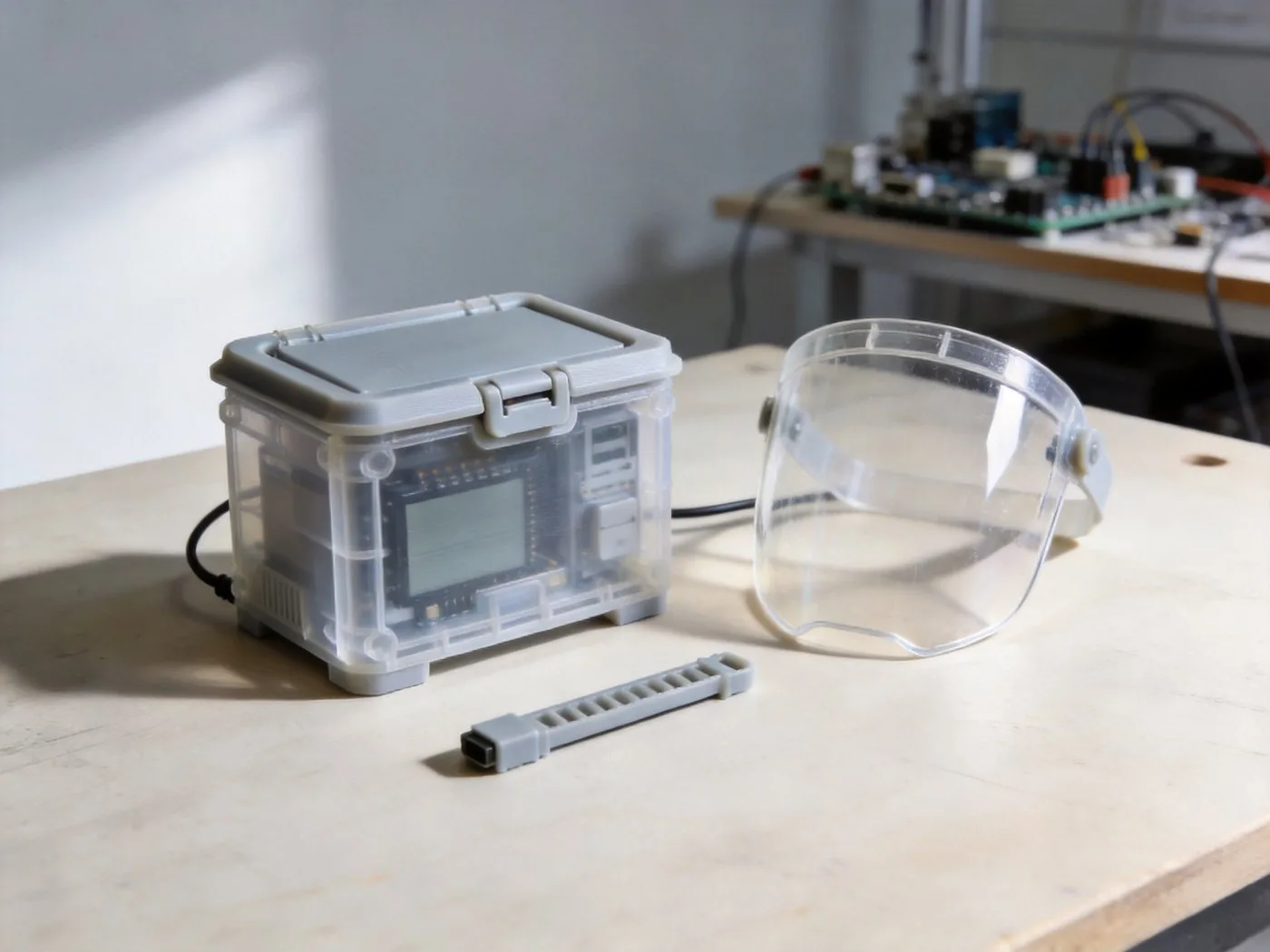
Entry-level modified grade with dependable mechanical properties.
Typical useElectronics housings, sensor boxes and control panel covers
- Density
- 1.30 g/cm³
- Water absorption
- 0.51 %
- HDT
- 50 ℃
- Tensile strength
- 29 MPa
- Elongation at break
- 8.43 %
- Flexural strength
- 68 MPa
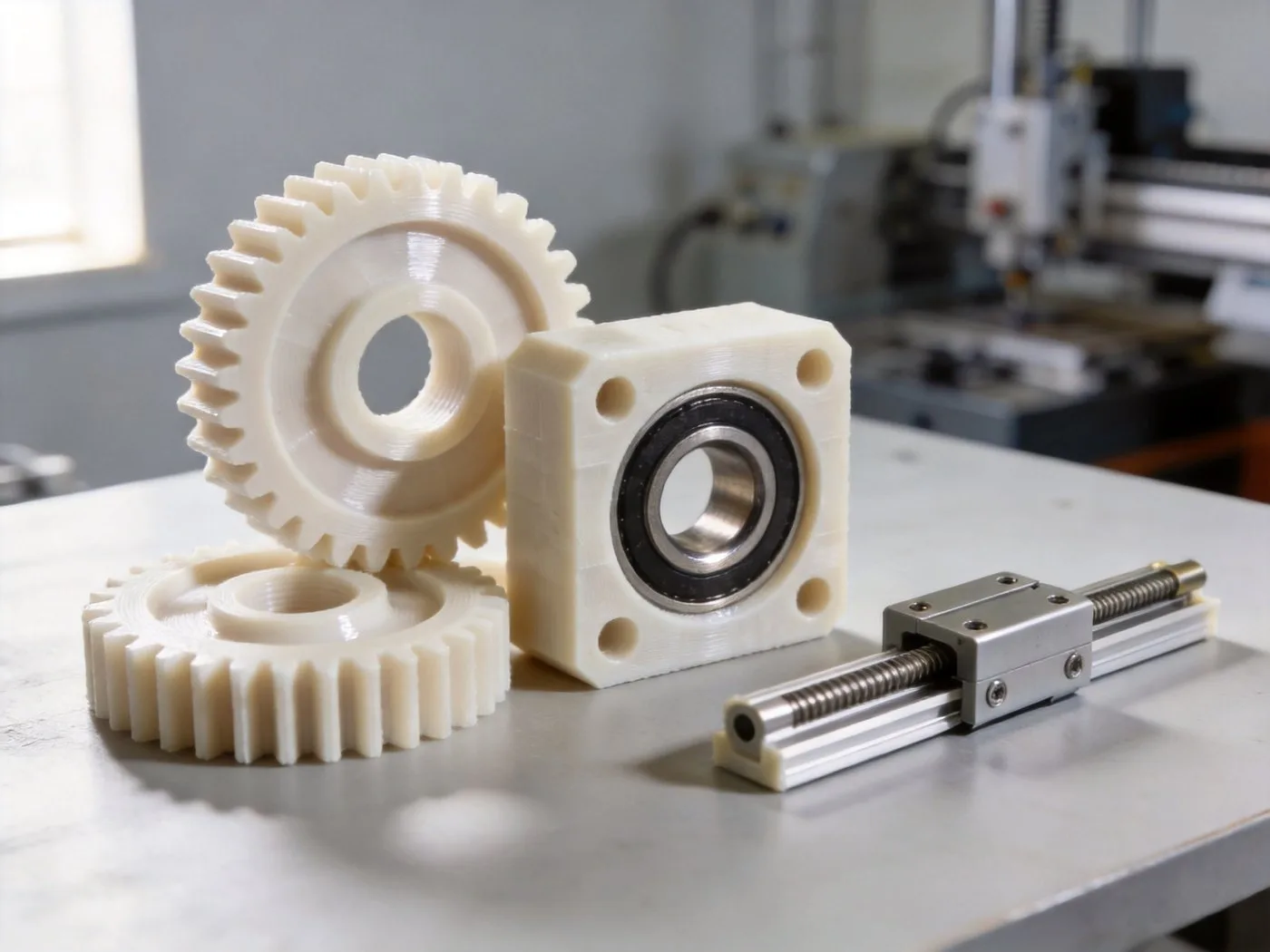
High surface finish and self-lubricating; for structural parts and gear components.
Typical useGears, racks and transmission parts
- Density
- 1.21 g/cm³
- Water absorption
- 2.59 %
- HDT
- 79.6 ℃
- Tensile strength
- 69 MPa
- Elongation at break
- 9.77 %
- Flexural strength
- 113 MPa
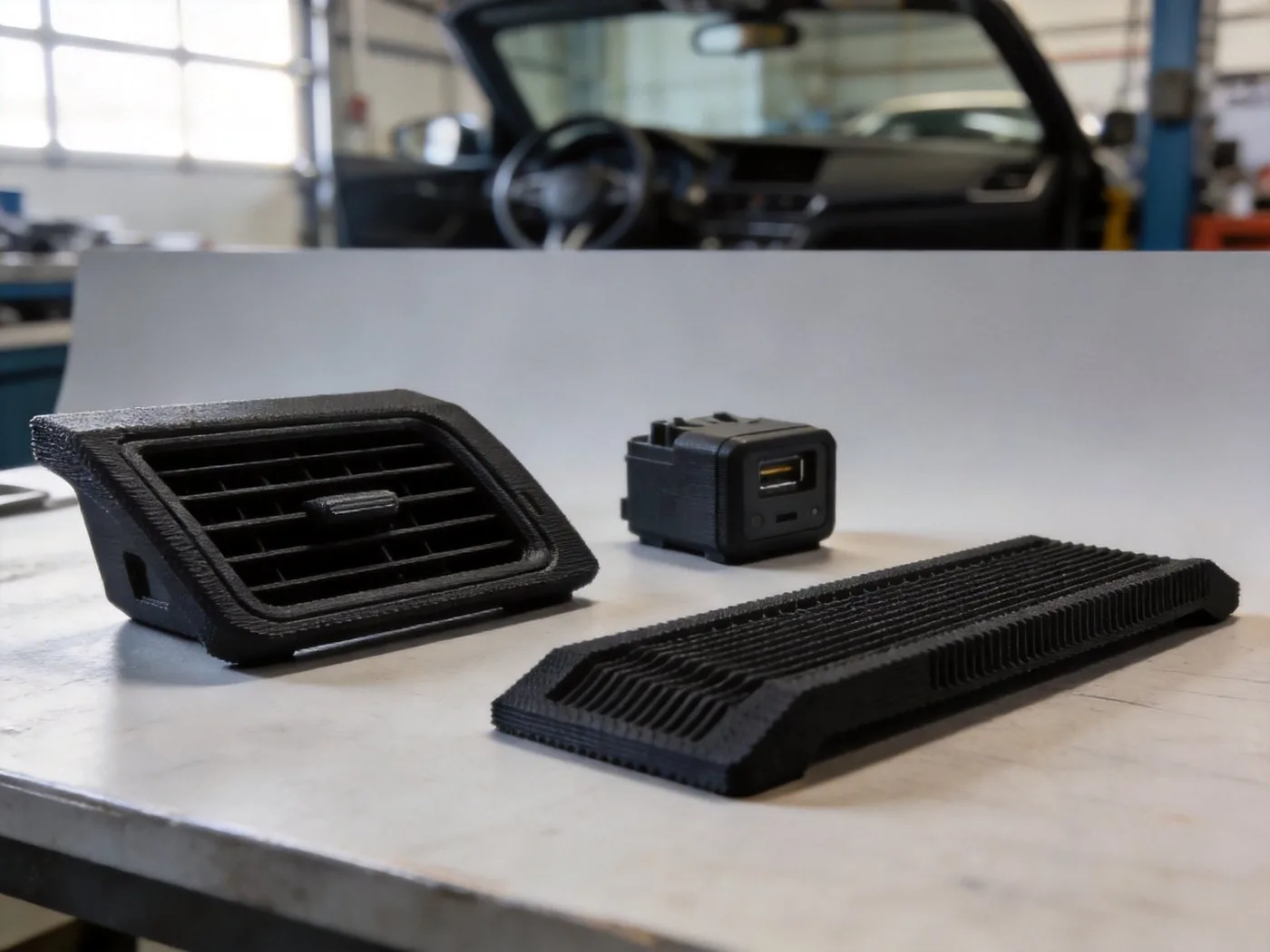
High-flow modified ABS for fast printing, with a maximum practical extrusion rate of up to 28 mm³/s. Lower odour than standard ABS, better warp and crack resistance and excellent impact strength; for automotive, home appliance and similar parts.
Typical useAutomotive interior: dash fittings, vent covers and trim
- Density
- 1.05 g/cm³
- Water absorption
- 0.35 %
- HDT
- 55 ℃
- Tensile strength
- 30 MPa
- Elongation at break
- 3.65 %
- Flexural strength
- 57 MPa
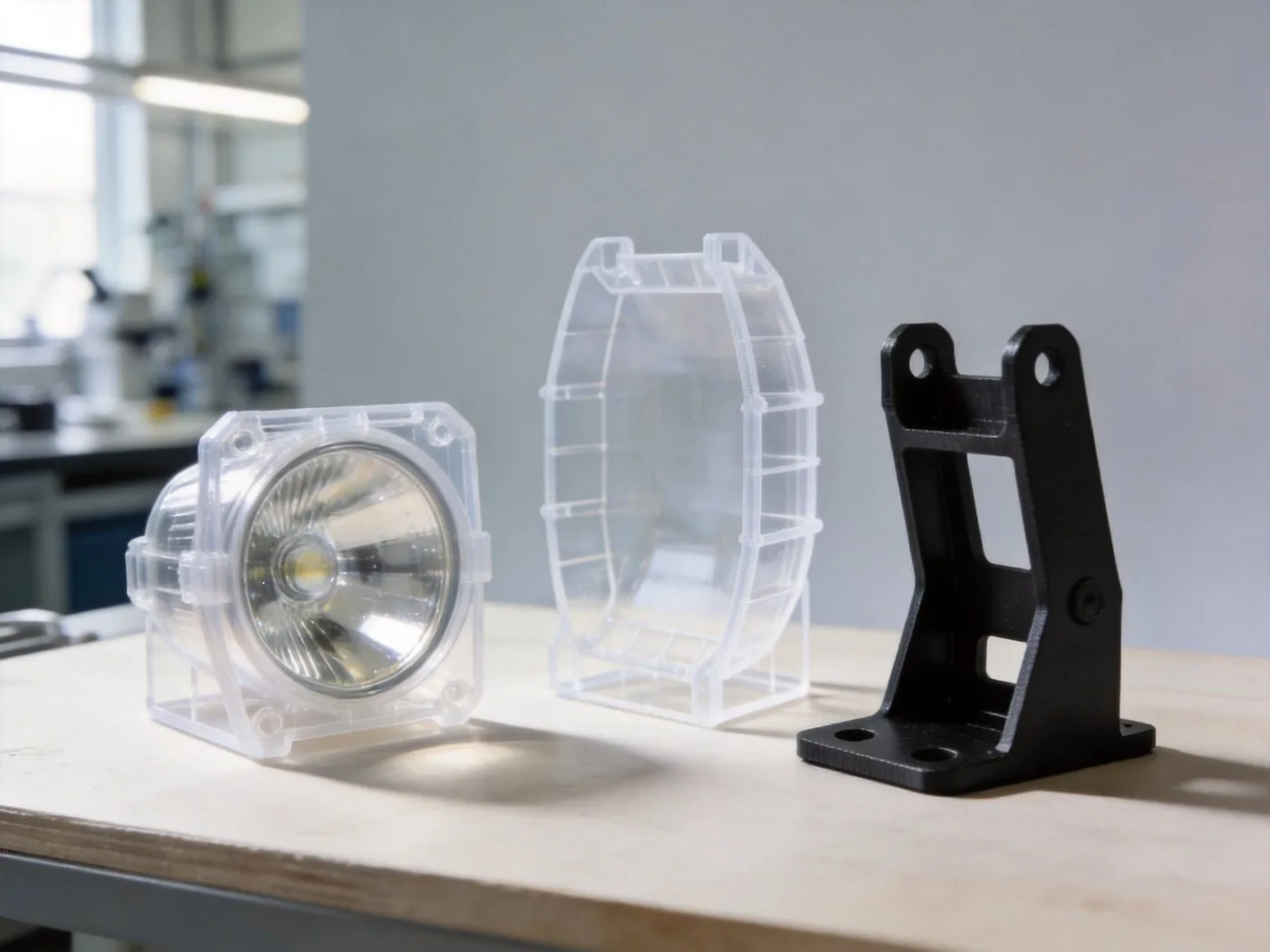
High strength, good durability and good print flow; for product models, brackets and mechanical parts.
Typical useLamp covers, windows and transparent guards
- Density
- 1.19 g/cm³
- Water absorption
- 0.25 %
- HDT
- 111 ℃
- Tensile strength
- 69 MPa
- Elongation at break
- 4.80 %
- Flexural strength
- 106 MPa
Carbon fibre CF
Carbon fibre raises stiffness and costs interlayer toughness and surface. Start here for load-bearing parts.
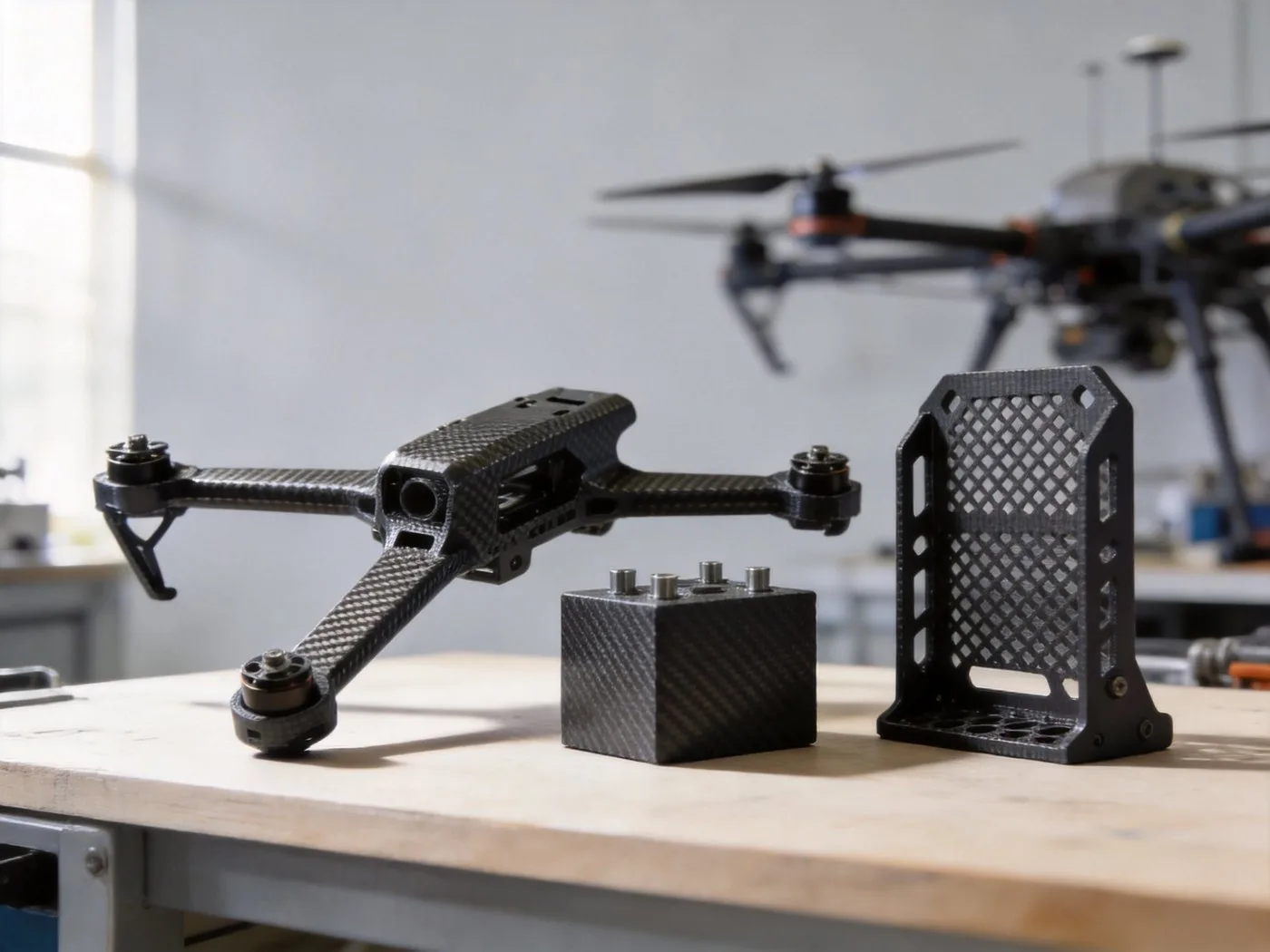
Structural and cosmetic parts requiring high rigidity.
Typical useHigh-rigidity structural and cosmetic parts
- Density
- 1.09 g/cm³
- Water absorption
- 0.30 %
- HDT
- 90 ℃
- Tensile strength
- 48 MPa
- Elongation at break
- 1.48 %
- Flexural strength
- 49 MPa
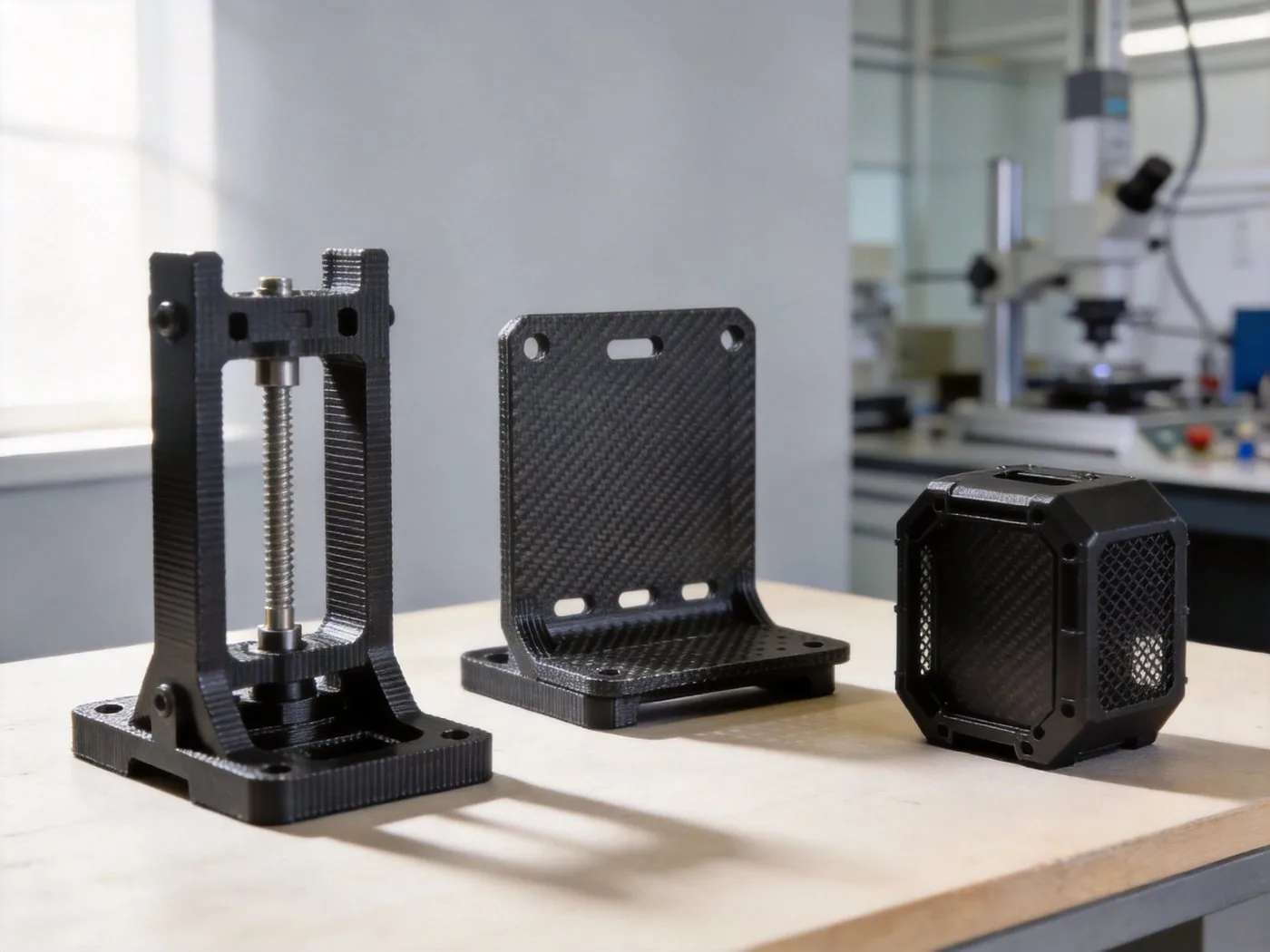
Impact-resistant components.
Typical useHigh-rigidity precision holders and assembly parts
- Density
- 1.24 g/cm³
- Water absorption
- 0.21 %
- HDT
- 113 ℃
- Tensile strength
- 65 MPa
- Elongation at break
- 6.50 %
- Flexural strength
- 116 MPa
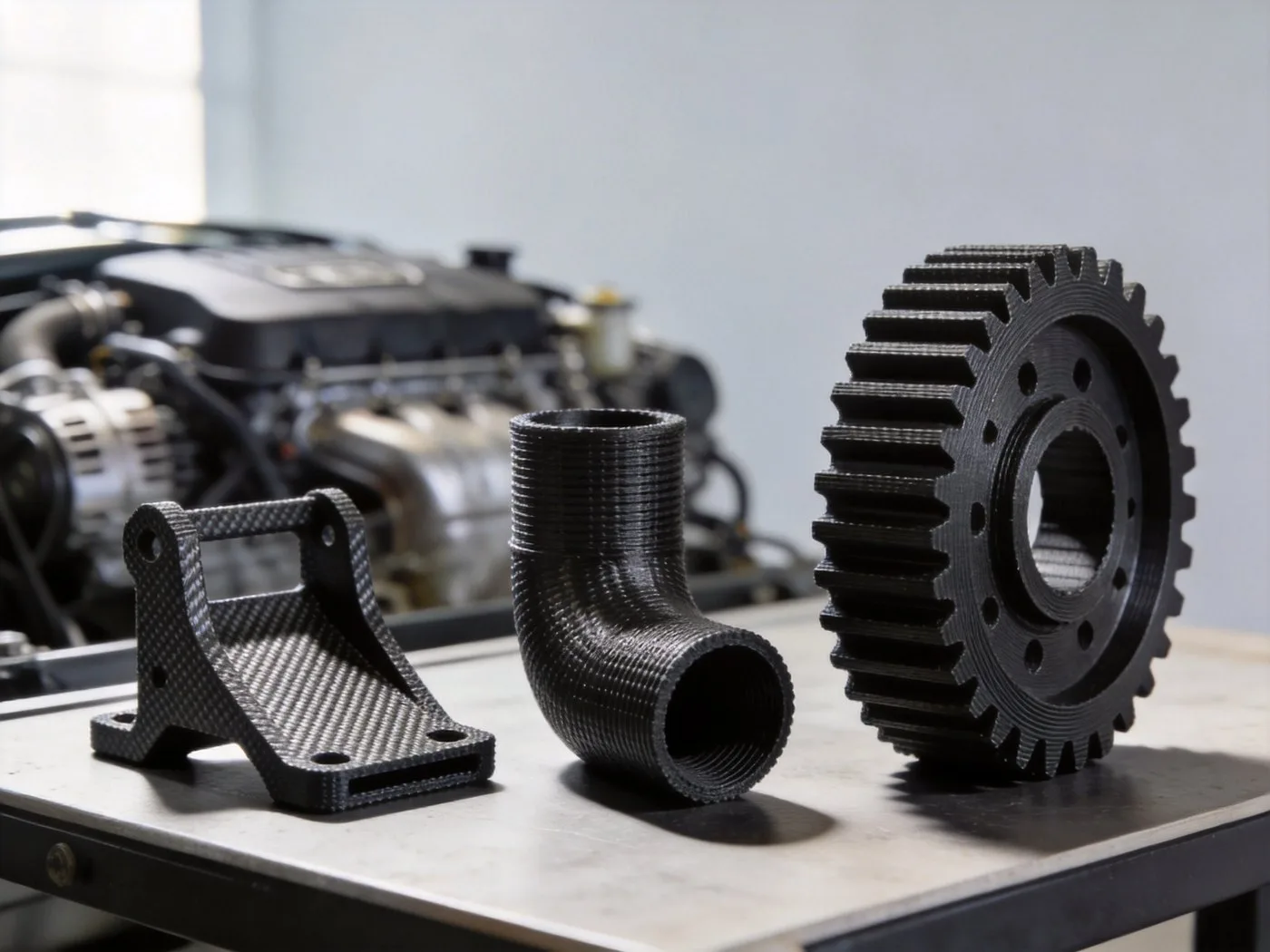
High-temperature, high-strength structural and cosmetic parts; wear-resistant components.
Typical useUnder-bonnet brackets, air ducts and battery housings
- Density
- 1.20 g/cm³
- Water absorption
- 1.37 %
- HDT
- 85 ℃
- Tensile strength
- 93 MPa
- Elongation at break
- 1.92 %
- Flexural strength
- 144 MPa
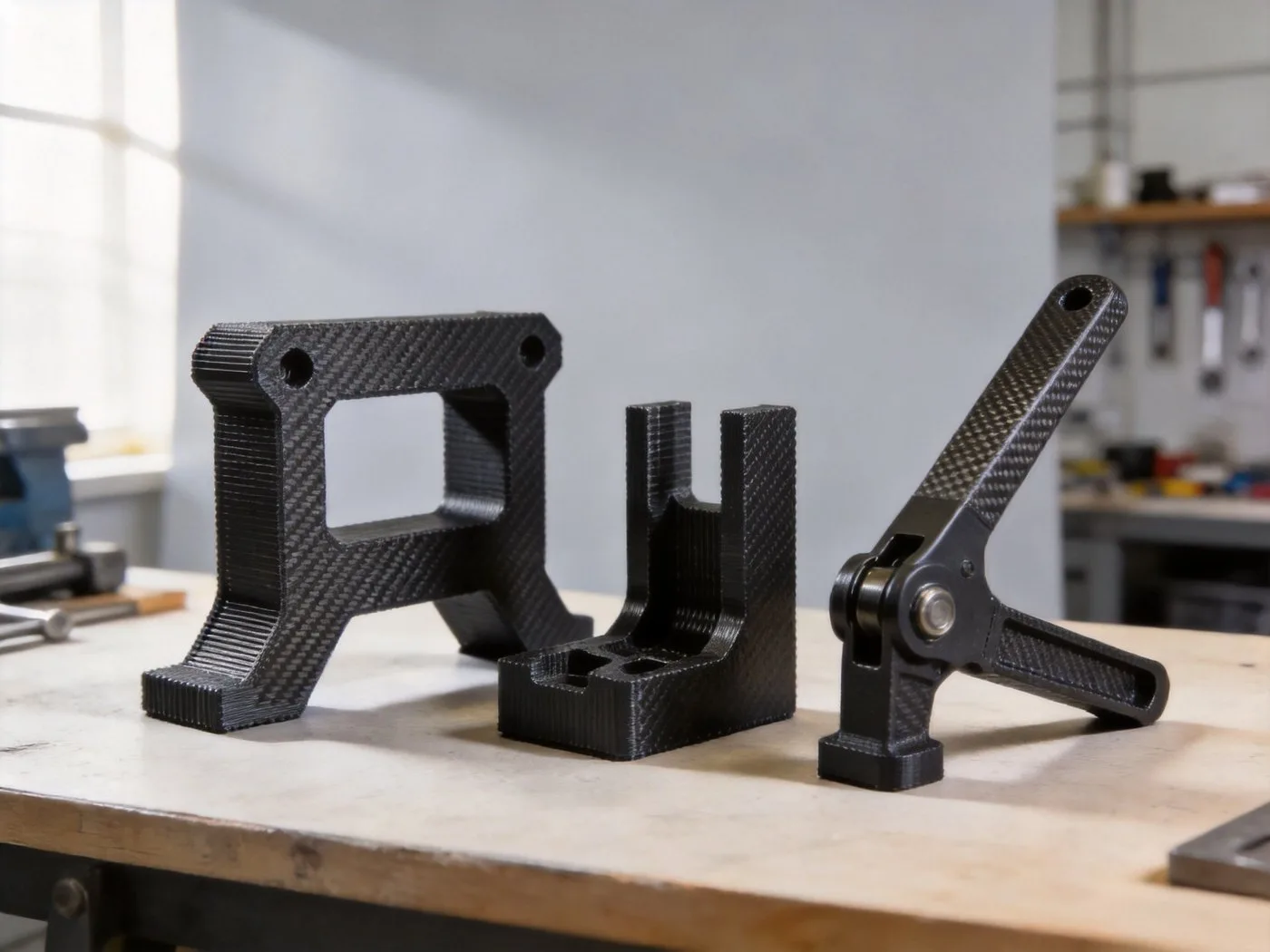
Load-bearing structural parts; automotive parts, jigs and fixtures, mechanical components.
Typical useLoad-bearing structural parts
- Density
- 1.30 g/cm³
- Water absorption
- 0.20 %
- HDT
- 85 ℃
- Tensile strength
- 71 MPa
- Elongation at break
- 2.53 %
- Flexural strength
- 118 MPa
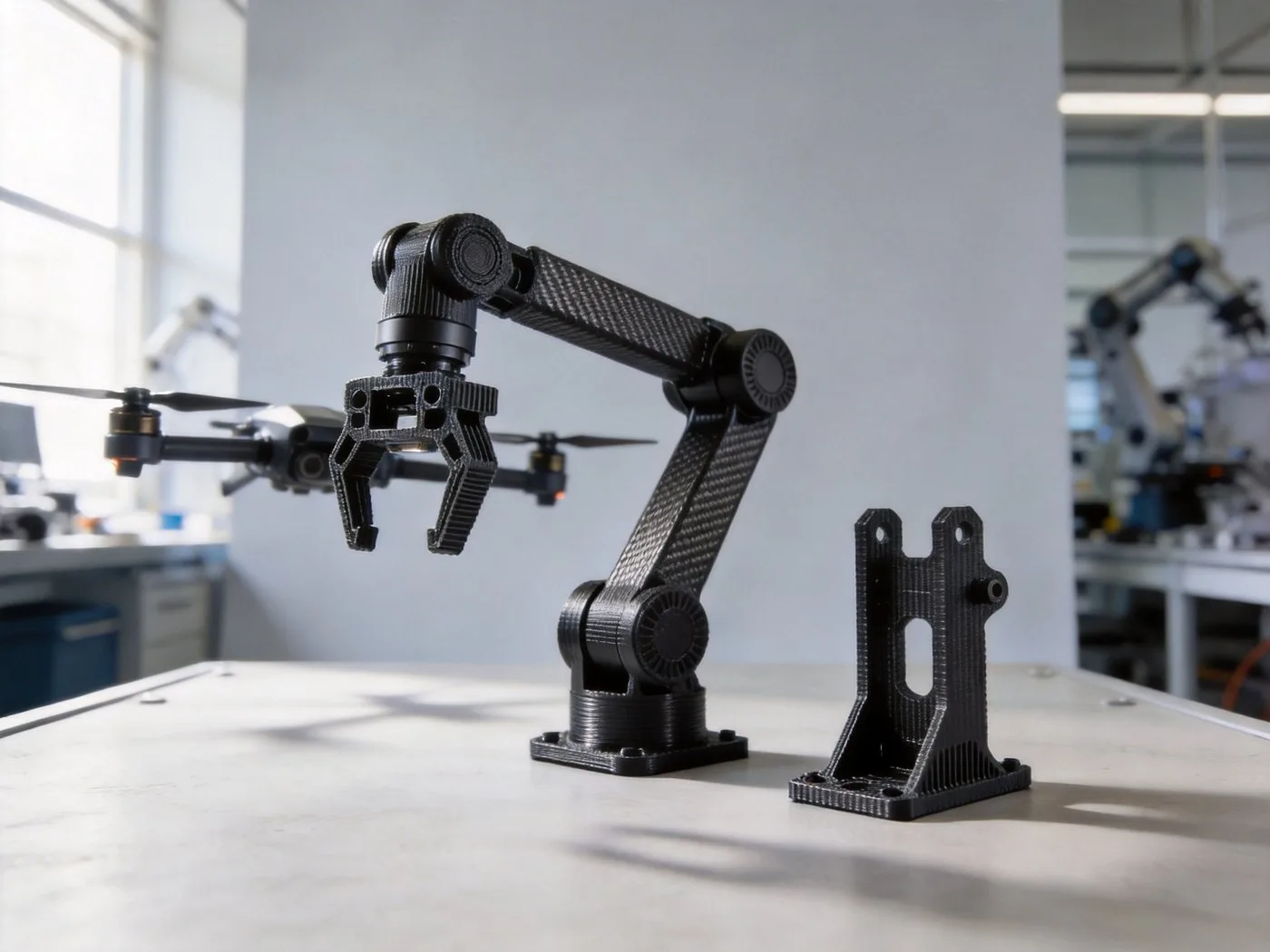
Load-bearing structural parts; automotive parts, jigs and fixtures, mechanical components.
Typical useOutdoor and load-bearing structural parts
- Density
- 1.30 g/cm³
- Water absorption
- 0.50 %
- HDT
- 87 ℃
- Tensile strength
- 73 MPa
- Elongation at break
- 2.49 %
- Flexural strength
- 114 MPa
Glass fibre GF
Glass fibre raises stiffness and heat resistance at lower cost than carbon. Use it where the duty is not extreme.
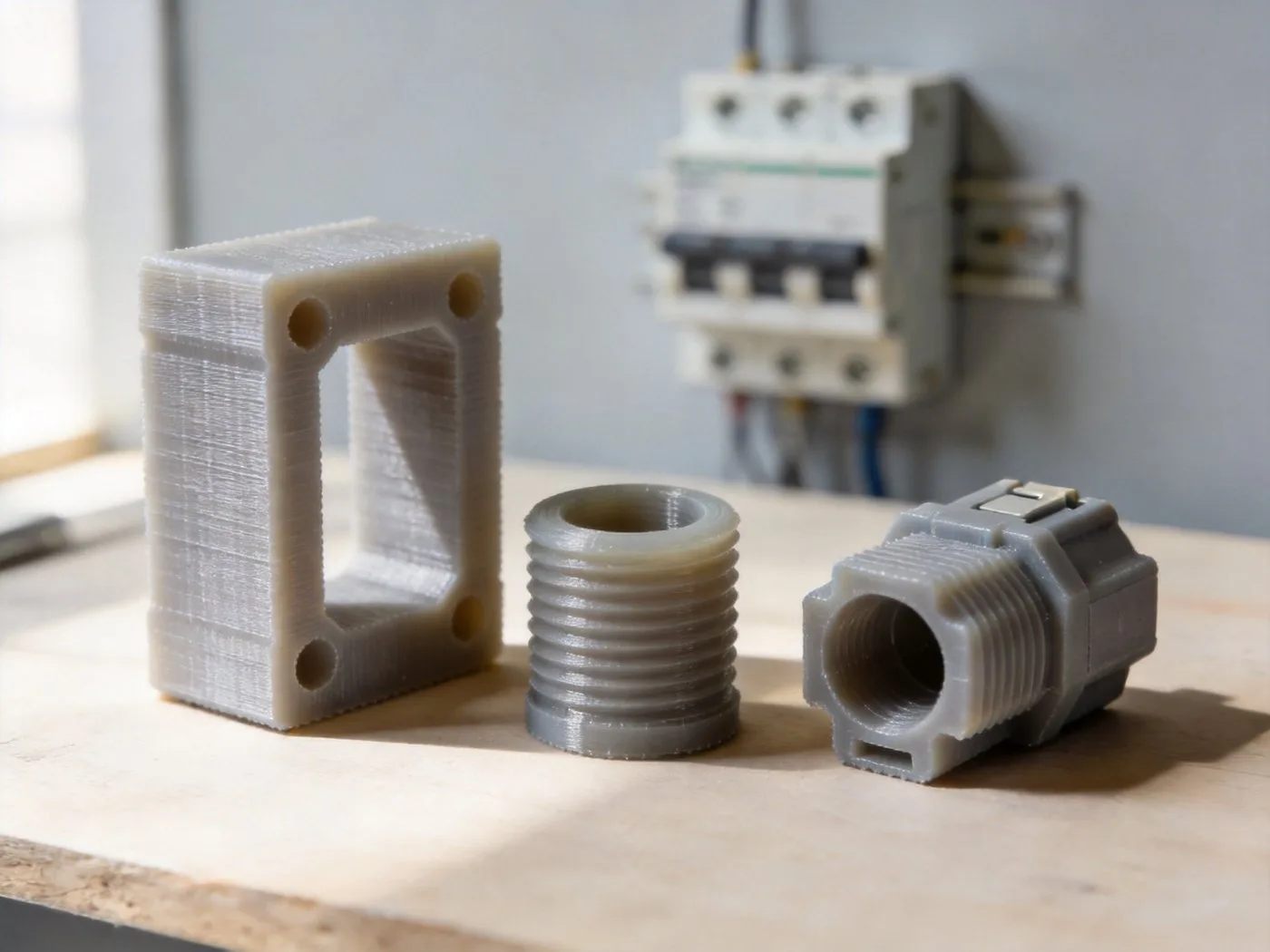
High-temperature nylon base: high strength, high wear resistance, excellent chemical resistance and high heat resistance. Good dimensional stability in printing with no warping or shrinkage; for heat-resistant insulating structural parts and wear-resistant components.
Typical useHeat-resistant insulating structural parts
- Density
- 1.27 g/cm³
- Water absorption
- 1.75 %
- HDT
- 83 ℃
- Tensile strength
- 84 MPa
- Elongation at break
- 2.71 %
- Flexural strength
- 138 MPa
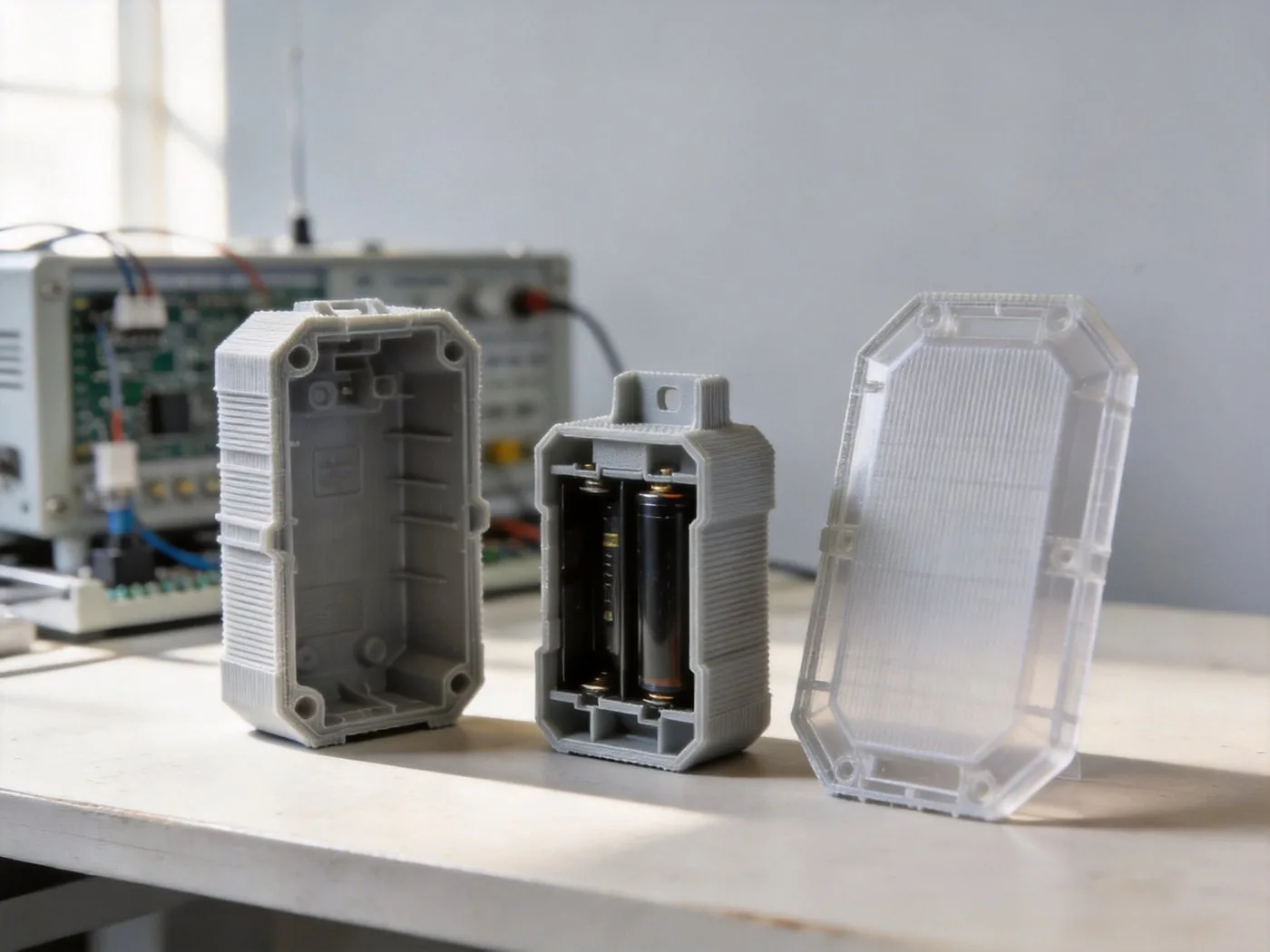
Heat-resistant insulating structural parts; impact-resistant components.
Typical useInsulating structural parts and housings
- Density
- 1.30 g/cm³
- Water absorption
- 0.22 %
- HDT
- 109 ℃
- Tensile strength
- 63 MPa
- Elongation at break
- 6.70 %
- Flexural strength
- 108 MPa
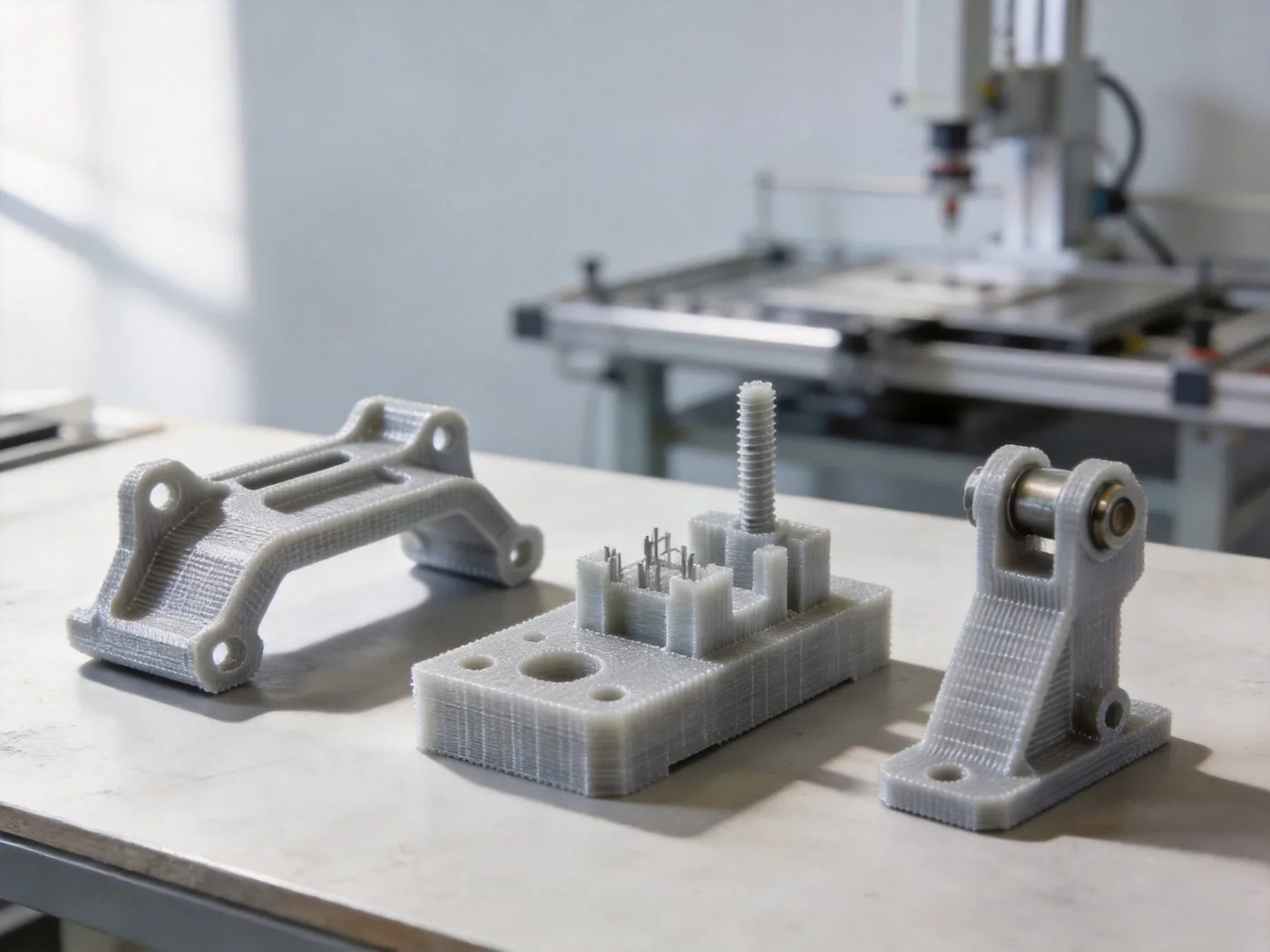
Automotive parts, jigs and fixtures, mechanical components.
Typical useAutomotive parts and interior brackets
- Density
- 1.38 g/cm³
- Water absorption
- 0.50 %
- HDT
- 77 ℃
- Tensile strength
- 65 MPa
- Elongation at break
- 2.53 %
- Flexural strength
- 99 MPa
Flame retardant FR
Where UL94 is required. State the rating and the thickness; a material name is not a report.
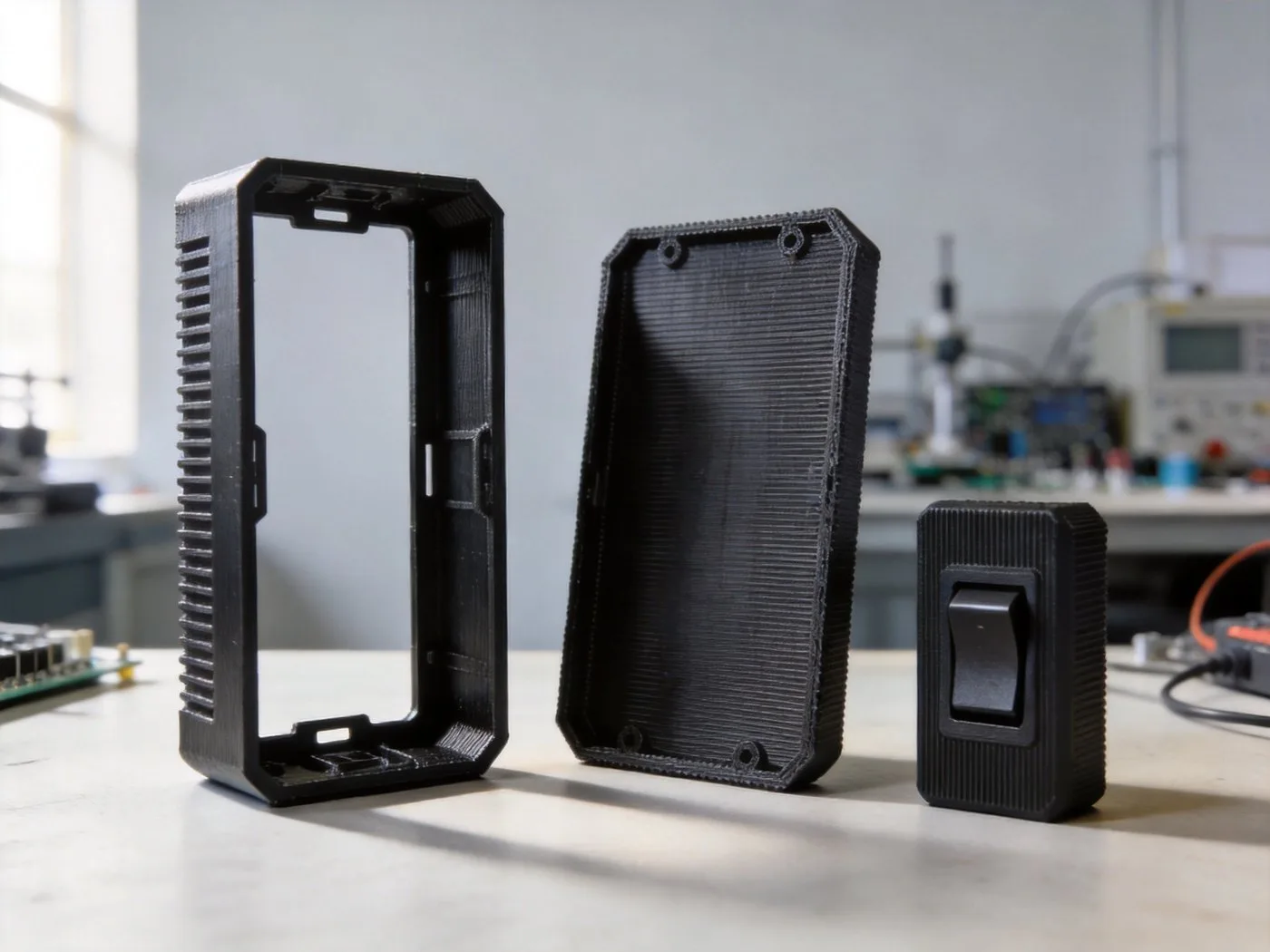
Flame-retardant thin-wall parts; automotive interior and exterior trim, business-machine housings and internal parts, telecom equipment enclosures, electrical appliance housings and home appliance parts.
Typical useFlame-retardant thin-wall housings and internal brackets
- Density
- 1.17 g/cm³
- Water absorption
- 2.10 %
- HDT
- 102 ℃
- Tensile strength
- 40 MPa
- Elongation at break
- 6.09 %
- Flexural strength
- 67.79 MPa
Anti-static ESD
Anti-static means a surface resistance inside a stated range. Give the range first, then the grade.
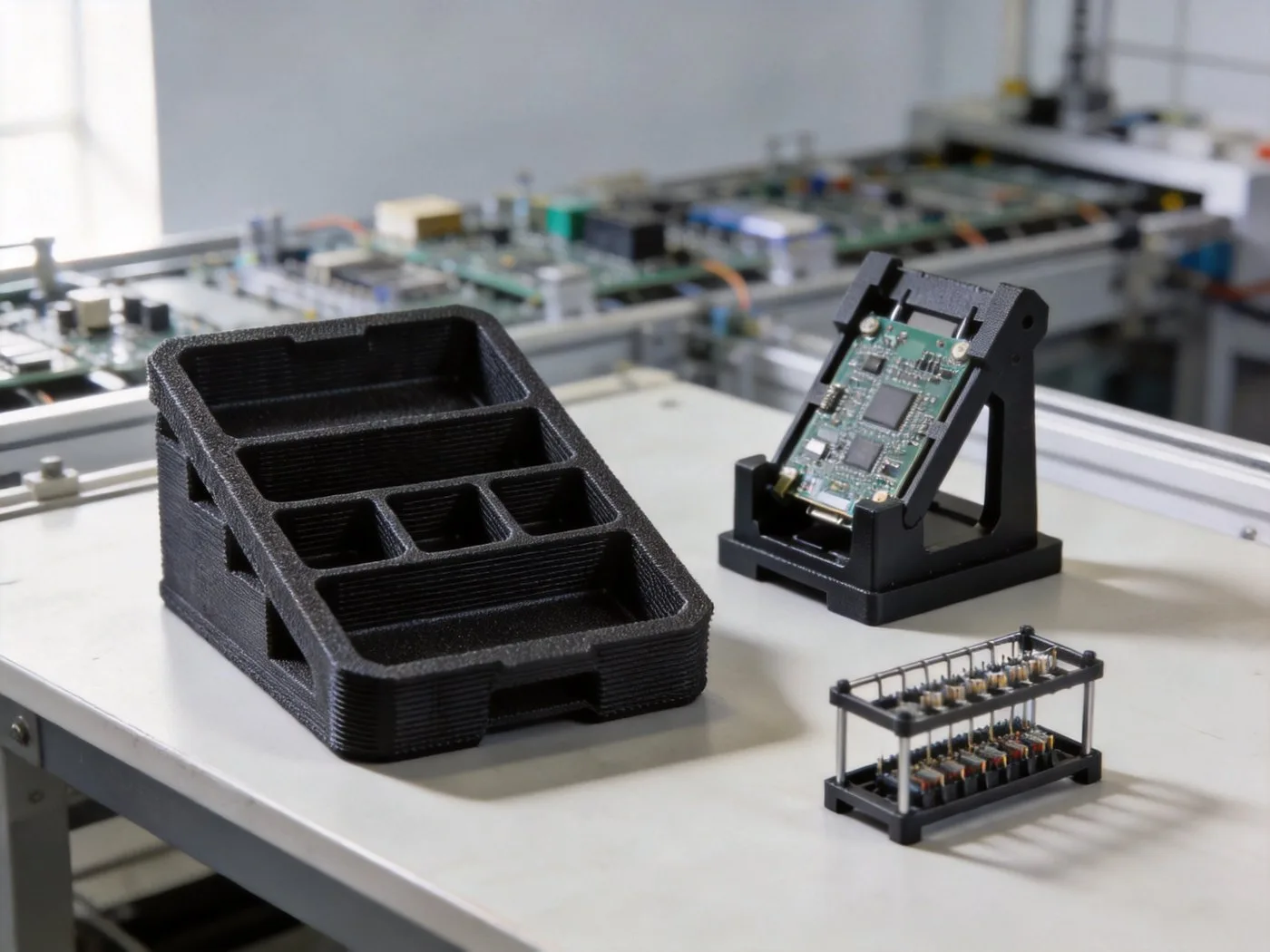
Electronics manufacturing: production, testing and packaging of ICs, semiconductors and electronic components, where anti-static protection prevents damage from electrostatic discharge.
Typical useESD trays, racks and liners
- Density
- 1.34 g/cm³
- Water absorption
- 0.10 %
- HDT
- 68 ℃
- Tensile strength
- 30.5 MPa
- Elongation at break
- 7 %
- Flexural strength
- 63.9 MPa
Elastomers
Soft, resilient, tolerant of repeated flexing. Hardness and modulus follow the use, not the grade name.
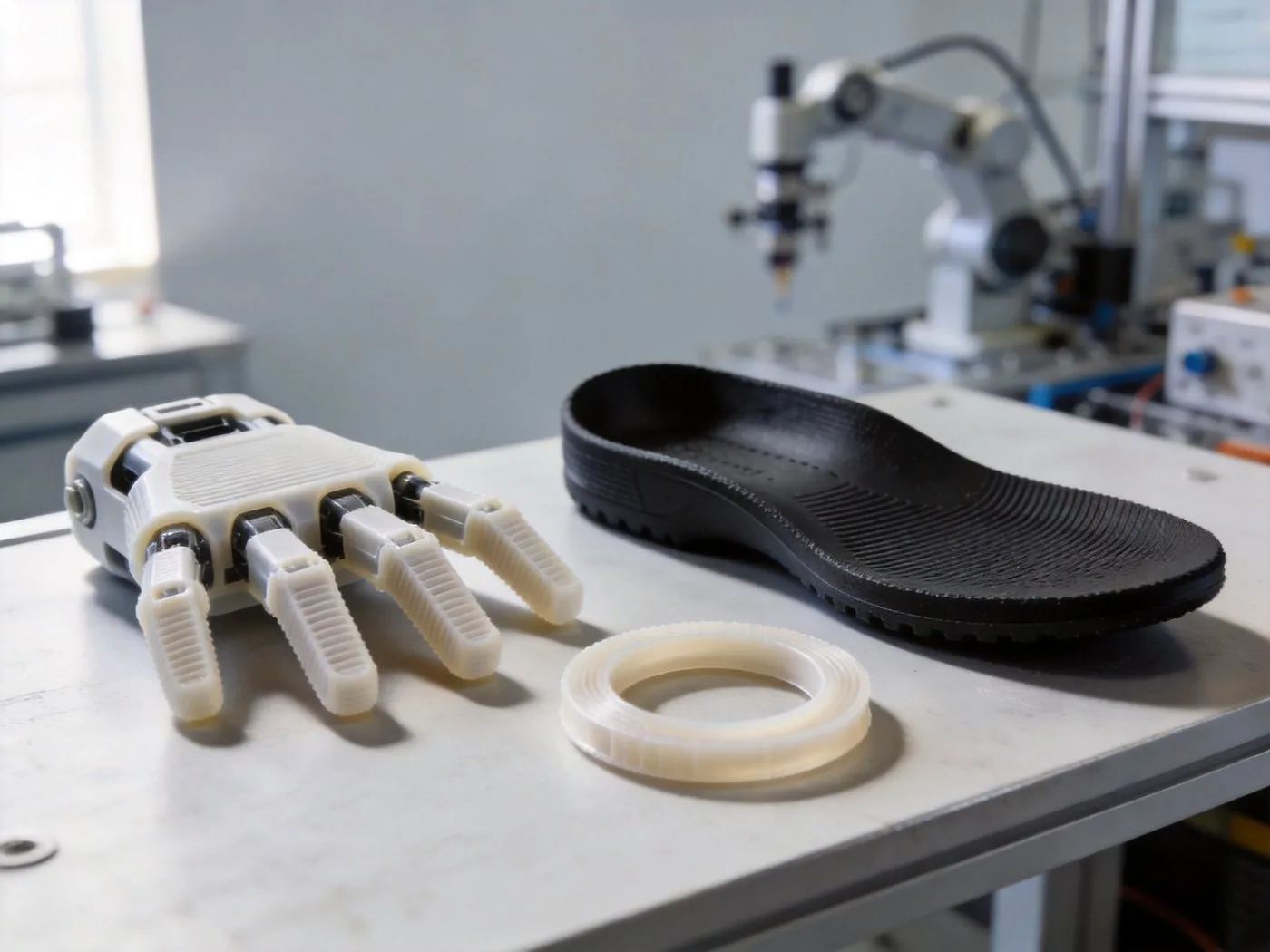
Industrial parts and assemblies (protective covers, guides, hinges, soft grippers); sports equipment (insoles, sporting goods); medical and rehabilitation devices.
Typical useSoft grippers and end-effector pads
- Density
- 1.20 g/cm³
- Water absorption
- 0.18 %
- HDT
- 53 ℃
- Tensile strength
- 35 MPa
- Elongation at break
- ≥800 %
- Flexural strength
- 4.47 MPa
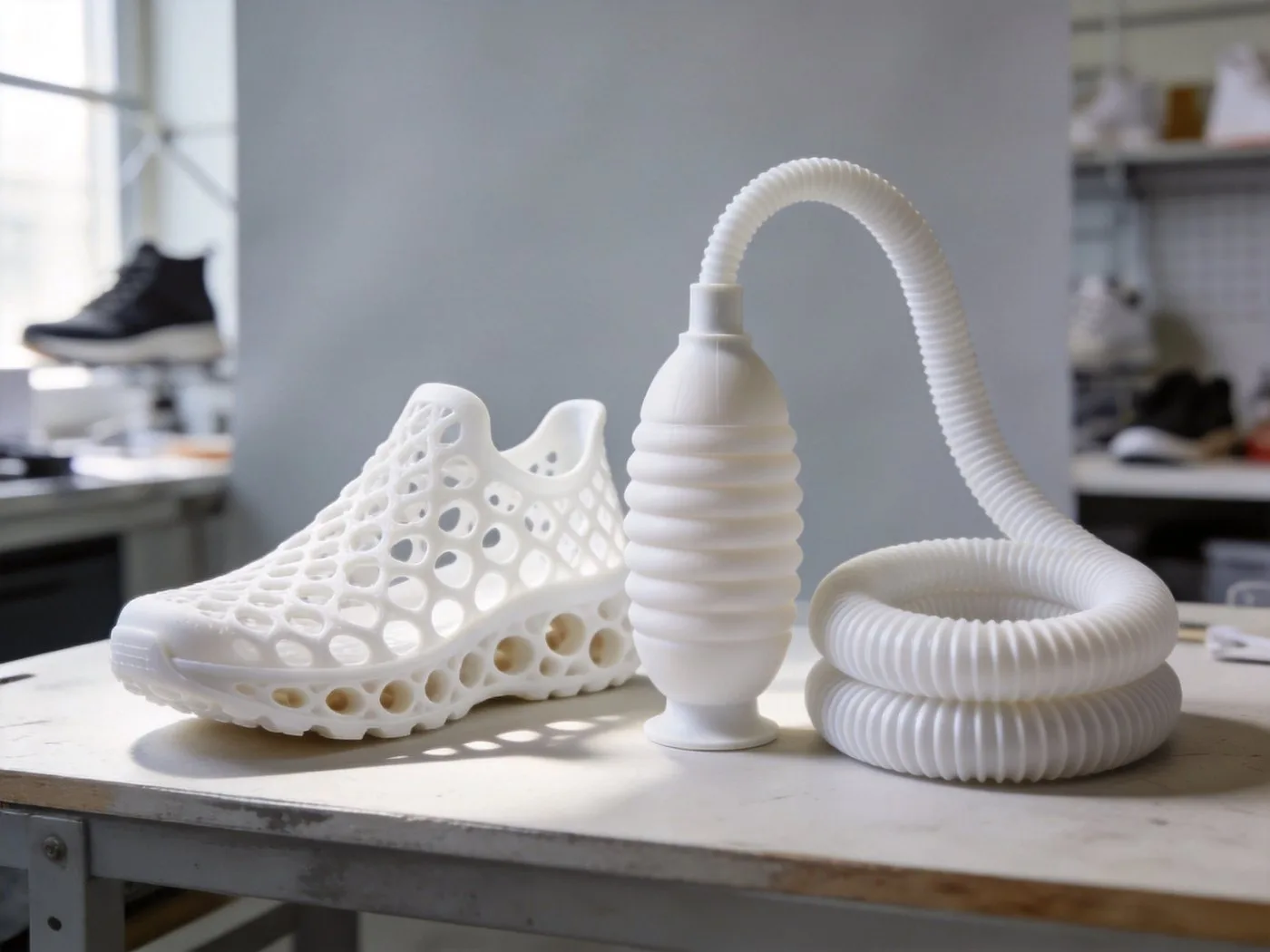
Extreme rebound, exceptional fatigue resistance and low weight; shoe midsoles, soft robotics, medical flexible tubing.
Typical useLattice midsoles
- Density
- 1.01 g/cm³
- Water absorption
- 1.68 %
- HDT
- 70 ℃
- Tensile strength
- 28 MPa
- Elongation at break
- ≥1000 %
- Flexural strength
- 30 MPa
Specialty
Soluble support, casting wax and similar. These exist for one operation and are not general substitutes.
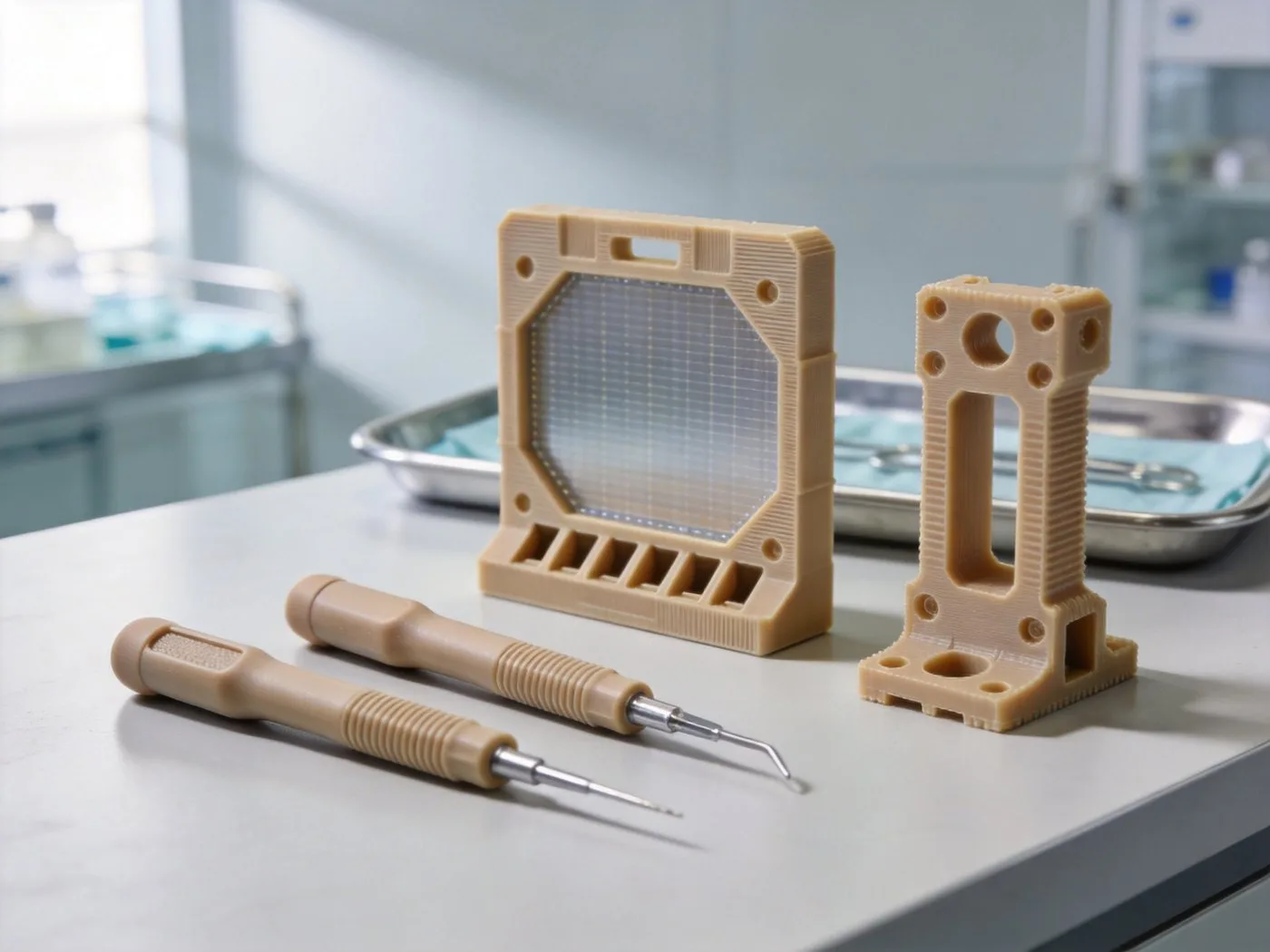
Impact resistant and highly corrosion resistant; suited to extreme conditions (offshore, aerospace).
Typical useRepeatedly sterilisable surgical instrument handles and guides
- Density
- 1.27 g/cm³
- Water absorption
- 0.06 %
- HDT
- 139 ℃
- Tensile strength
- 92 MPa
- Elongation at break
- 5.00 %
- Flexural strength
- 145 MPa
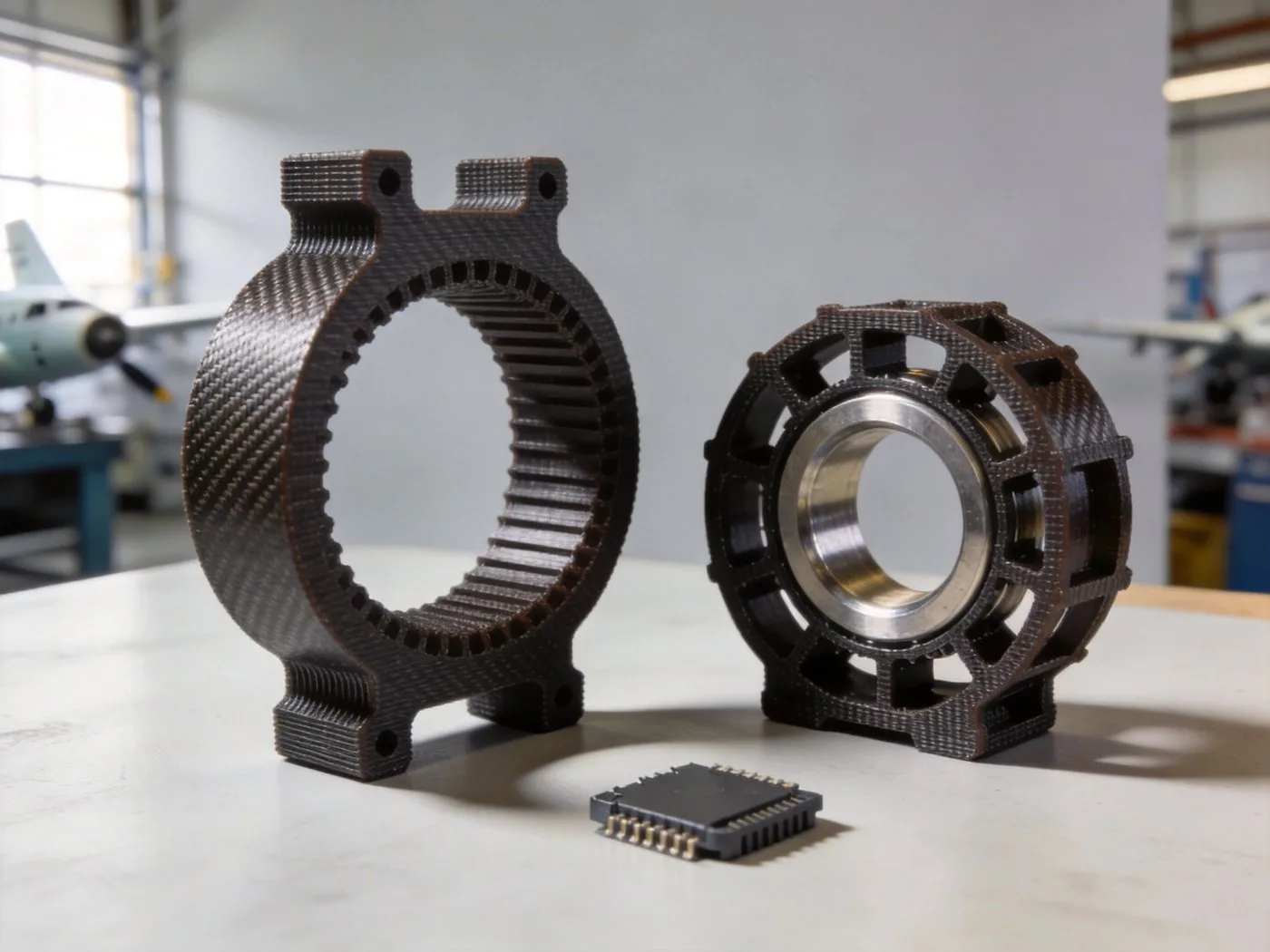
Fibre-reinforced grade: impact resistant and highly corrosion resistant; suited to extreme conditions (offshore, aerospace).
Typical useAero-engine peripheral parts and structural brackets
- Density
- 1.38 g/cm³
- Water absorption
- 0.26 %
- HDT
- 165 ℃
- Tensile strength
- 94 MPa
- Elongation at break
- 5.10 %
- Flexural strength
- 162 MPa
Special purpose
Compounded for a single purpose. Used off-purpose it performs worse than a general grade.
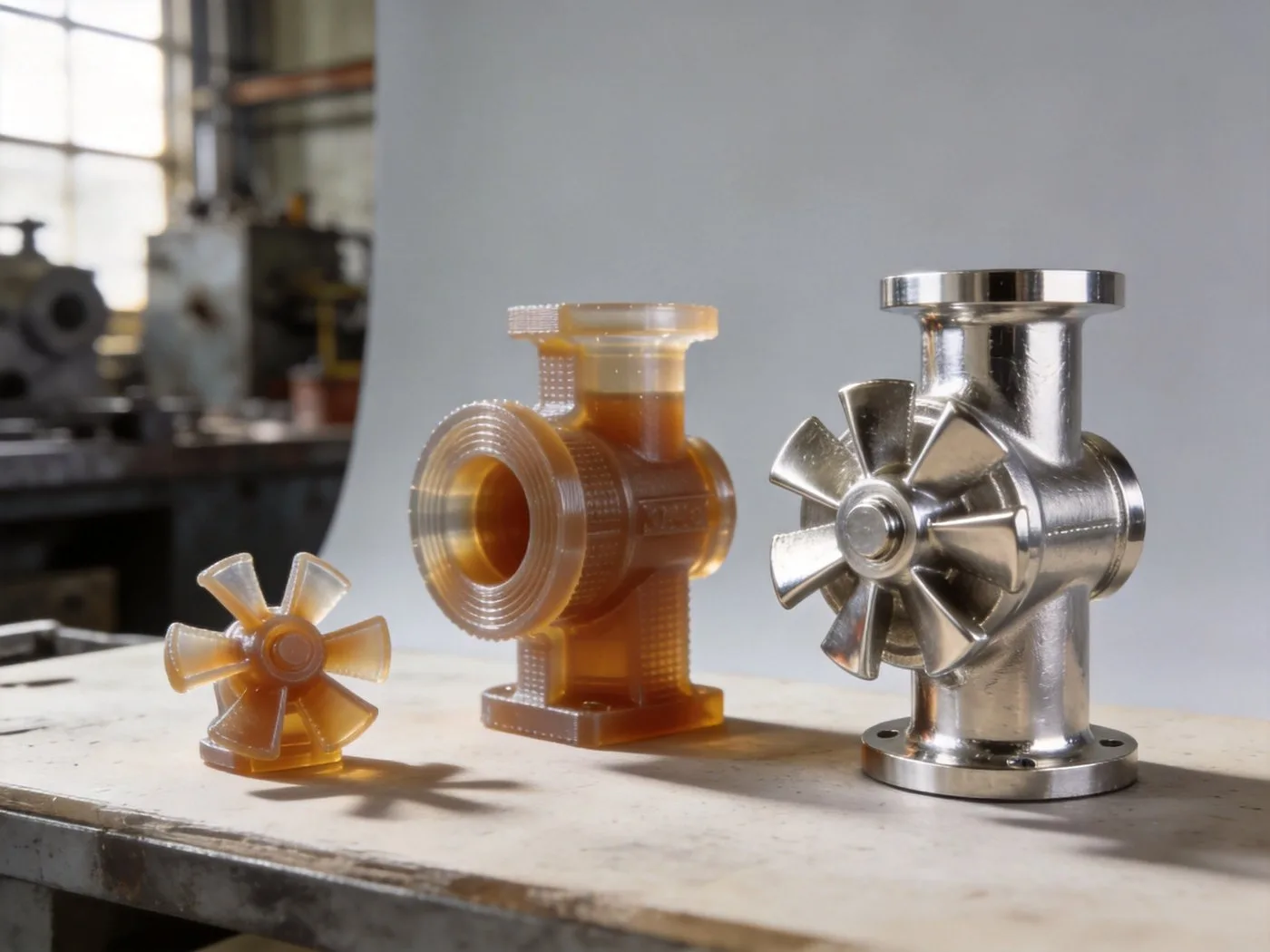
A consumable for precision casting patterns. 3D printing cuts cost and lead time significantly because no tooling is required.
Typical useInvestment casting patterns replacing wax
- Density
- 1.1 g/cm³
- Water absorption
- 2.09 %
- HDT
- 67 ℃
- Tensile strength
- 53 MPa
- Elongation at break
- 5.70 %
- Flexural strength
- 78 MPa
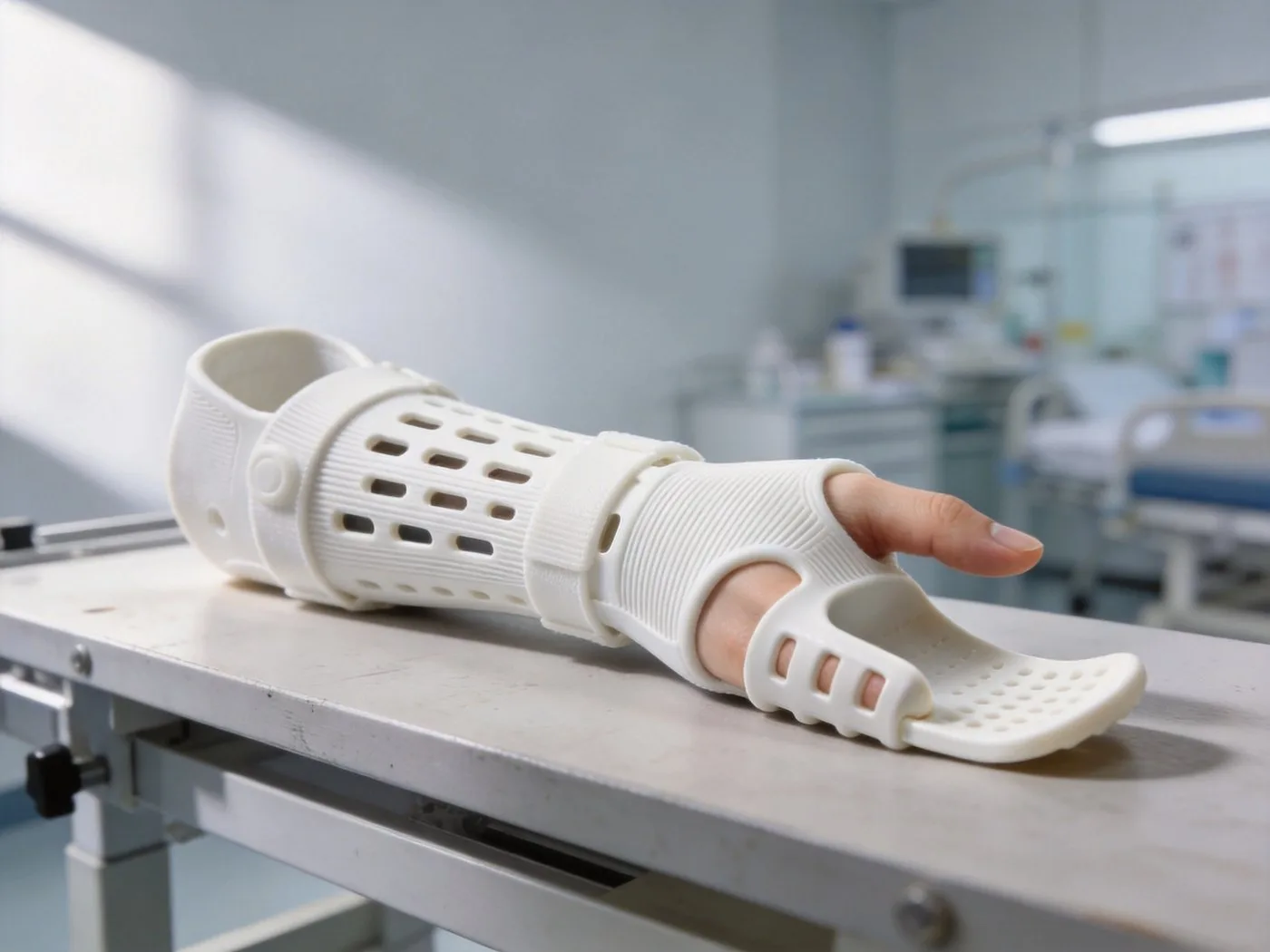
A new-generation 3D printing filament developed for medical brace applications. Safe composition, easy to use, reliable, with high print quality and high-speed printing. Tested to GB/T 16886 and ISO 10993 for skin-contact safety.
Typical useMedical braces, orthoses and immobilisation devices
- Density
- 1.25 g/cm³
- Water absorption
- 0.02 %
- HDT
- 54 ℃
- Tensile strength
- 35 MPa
- Elongation at break
- >40 %
- Flexural strength
- 23 MPa
Source: 艾迪造物 AddiMaker《增材制造材料解决方案》2026-09-04. Figures are typical values, not guaranteed; final selection depends on print process, infill and part testing.
Need help selecting a material?
Send us the service temperature, load case, contact media and expected volume, and we will propose a material and process combination. Request a selection review →